Yes, all our products are both microwave and dishwasher safe; however, we do recommend washing our products by hand after each use to extend their lifespan, keep them extra safe, and avoid something falling against them in the dishwasher.
Always wash your ceramics after each use to extend lifespan and to avoid staining the silicone lid of our reusable range.
Always transport your Travel Cup with the lid on to protect the rim of the cup. The Rim is the most fragile part. If you have popped your cup in your handbag, remember not to drop your bag down on the floor, you’ll likely cause your Travel Cup or Bowl to crack with the impact.
Remember, ceramic is durable, but it will break if knocked or dropped, so handle it with care.
If washing your products in the dishwasher, be sure nothing is going to fall or bump against them during the washing process.
If you have a build-up of tea tannins or coffee inside your Travel Cup or Mug, soak it in vinegar overnight and give it a good scrub.
The standard barista-made coffee with milk is generally made at around 65 degrees, which isn’t usually too hot to hold.
If you like your daily brew extra hot, or you're using your Pottery For The Planet Travel Cup to enjoy a herbal tea or a long black, you may find the ceramic gets a bit hot.
You may want to get your hands on an additional Silicone
Heat Band to go around your ceramic keep cup if you think it might be too hot to handle.
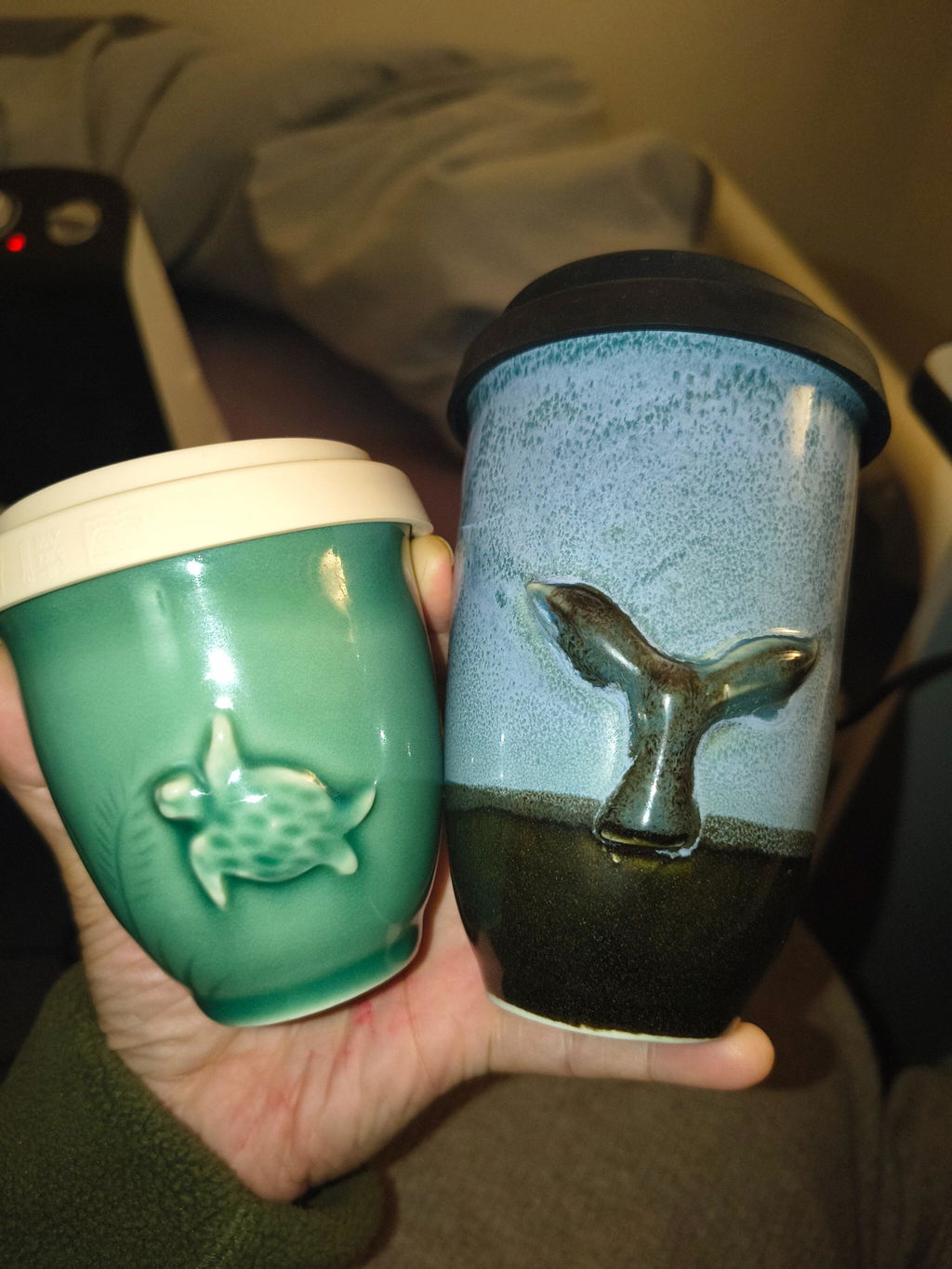
Pottery For The Planet Travel Cups come in 4 sizes. 4oz, 6oz, 8oz, and 12oz. Our cups are designed to fit into most cup holders in cars and prams. You can see the full-size specifications listed in every product description.
We hand-mix all our glazes from scratch using a variety of food-safe minerals. For our own health and safety, we must avoid using any toxic materials.
Our glazes are free from lead and all known toxic materials; however, some do contain oxides, so they may contain metal. All our products are high-fired to 1260 degrees Celsius so that the ingredients go through quartz conversion and become vitrified (turned to stone). This means that the pots can no longer absorb and leach.
Rest assured that just as the health of our planet is of ultimate concern to us at PFTP, so too is human health.
As a handmade, artisan product, each Pottery For The Planet piece that comes out of the kiln is unique.
There are all kinds of things in the process of making pottery that will cause variations in the resulting “look” of the glaze. This can be anything from the texture on the surface of the clay when the cup is made, to the humidity in the air when the glaze was applied, or to the position of the cup in the kiln.
These variations are what make your new ceramics truly unique.
Our products are high-fired to 1260°C - vitrified stoneware. This means they are designed for commercial use and can withstand high temperatures and fluctuations from zero to 100°C or more - no problem, provided the product isn’t damaged.
Pottery For The Planet products are made of ceramic, which is durable and suitable for any temperature and transportation; however, if you drop your ceramic, it will break. If your product gets knocked against a hard surface,ce it will crack. You can read our tips on caring for your products
here.
We check and test all of our products before they are packaged and sent, and we can guarantee that no products leave our studio with hairline cracks or faults.
The lines you see in the glaze on some ceramics are due to “glaze crazing” and are a perfectly normal feature of many glazes.
Don’t worry, glaze craze is not a crack and will not affect the functional or hygienic aspects of your item. Don’t be alarmed if the glaze on your cup continues to craze over time; this is also perfectly normal.
Glaze crazing occurs in some glazes where the shrinkage rate of the clay differs from the shrinkage rate in the glaze, resulting in a beautiful crackled, sometimes eggshell effect. The thickness of the glaze application will determine the amount of crazing (if any), so not all ceramics will feature a craze.
You could try Araldite (two-part epoxy glue) to glue your ceramics back together, as we have done here before with favourite broken pieces.
If you have glued your product back together, we would not recommend using it for warm or hot liquids/food anymore.
Whilst Araldite will provide a strong repair, these adhesives will start to soften with temperatures above 60 °C or 70°C.
You could keep your repaired sentimental item as a showpiece or any other application you find useful, but we would not recommend heating it up.